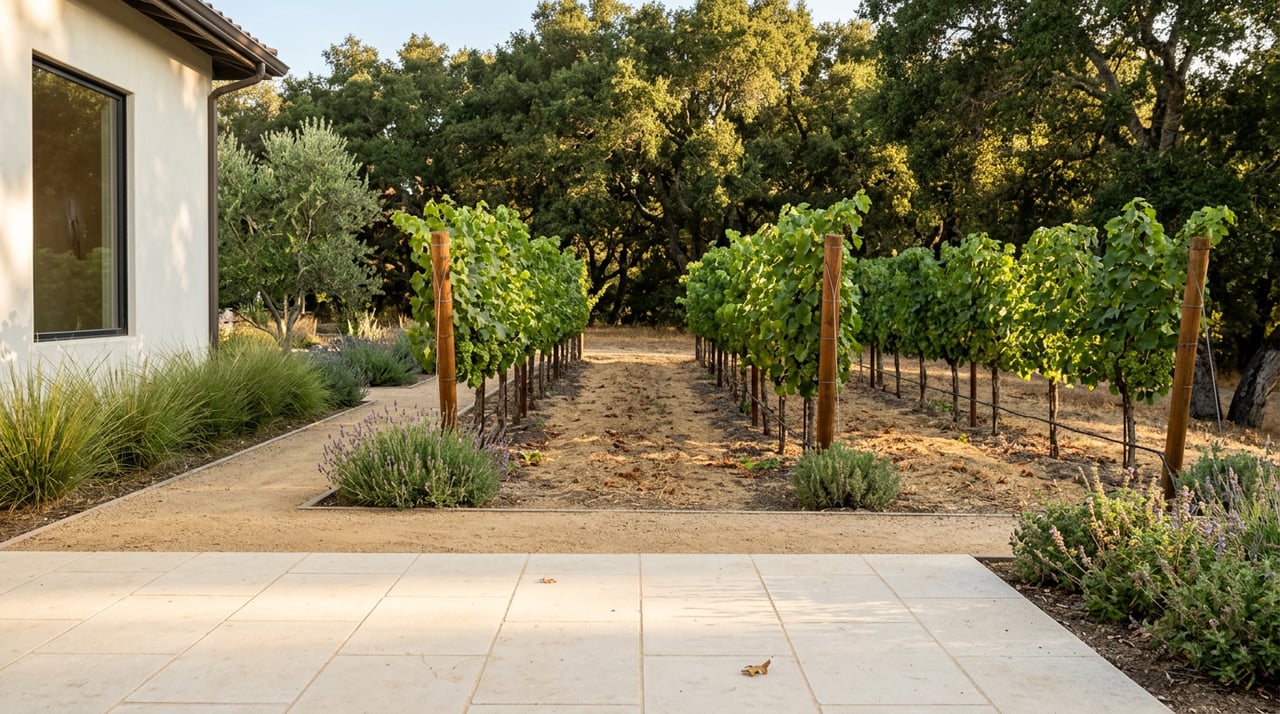
Asti Vineyard Land Values in Alexander Valley for 2026
July 9, 2026
July 9, 2026
Buyers looking at vineyard parcels around Asti this year are reading two numbers. The first is the per-acre range for Alexander Valley vineyard land, commonly quoted between roughly $100,000 and $200,000-plus. The second is the district grape price average from the 2025 California Grape Crush Report, released March 13, 2026.
Both numbers are real. Neither is telling you what a new buyer's fruit will fetch on a new contract. That gap, more than any single line item on a listing sheet, is the story of the Asti vineyard market in 2026.
According to the preliminary 2025 crush report covered by the Press Democrat in March 2026, Sonoma County crushed 185,500 tons of wine grapes last harvest, down 13.5% from 2024. The North Coast crop was valued at $1.33 billion, down 13%, and statewide production hit the smallest crop in more than two decades.
Sonoma County's district-wide weighted average fell to $2,761 per ton in 2025, down from $2,927 in 2024 and $2,975 in 2023. Cabernet Sauvignon, the varietal that anchors Alexander Valley pricing, slid to $2,773 per ton, a cumulative drop of about 9.4% over two years. Chardonnay averaged $2,367 in Sonoma County, down 8.1% and about 3% below trend.
Here is the mechanism most buyers miss. Christian Klier, North Coast grape broker for Turrentine Brokerage, told the Press Democrat in March 2026 that district averages often reflect long-term contracts negotiated years earlier, many with annual price escalators baked in. His estimate: it will take roughly two more years before the district average actually catches up to the pricing wineries are offering on new contracts today.
For anyone underwriting an Asti parcel by taking the crush-report average and multiplying by tons per acre, that lag is not a rounding error. It is the difference between a defensible pro forma and one built on numbers that expired before the ink dried.
Asti is a small unincorporated community south of Cloverdale, inside the Alexander Valley AVA, which was established in 1984 and stretches from the Russian River east to the Mayacamas foothills. The AVA holds roughly 14,449 vineyard acres and 43 wineries by the Wine Road tally, and about 15,000 vineyard acres and 42 wineries by Sonoma County Tourism's count.
The names surrounding Asti carry weight in a way that flows directly into land pricing: Robert Young Vineyard, planted in 1963; Jordan; Simi; Silver Oak's Alexander Valley estate; and the historic Asti property itself, once the seat of Italian Swiss Colony and later home to the Souverain brand. That property is not incidental. When E. & J. Gallo acquired the Asti Winery, industry coverage from WineBusiness Analytics highlighted its senior water rights dating to 1914 as a headline reason for buyer interest.
That single fact should shape how a buyer thinks about every parcel within a few miles.
Two adjacent parcels in this stretch of the Russian River corridor can look identical on aerial photography and price out very differently once you read the water documentation. Under California's evolving groundwater rules and periodic drought curtailments, senior surface-water rights and well pump-test data are not paperwork. They are the assets.
A responsible diligence packet for an Asti-area vineyard should include:
When a listing packet is thin on these items, the correct read is not that they don't exist. It is that the seller has not been asked to produce them recently, which usually means the last transaction happened in a friendlier water regime.
The AVA on the sign at the driveway is the marketing wrapper. Underneath, four variables do most of the work in setting the price a serious buyer should pay in 2026.
1. Contract stability, not contract price. Signed grape purchase agreements with credible wineries are worth more than a spot-market ton figure, because the district average may still be reporting escalators from contracts written before the current oversupply. Ask for three to five years of delivered prices and any quality bonuses. If the fruit is uncommitted heading into 2026, that is a fact the price should reflect.
2. Block age and replant math. Older, well-maintained Cabernet blocks are scarce and can command premiums. Blocks facing near-term replant for phylloxera, trunk disease, or rootstock mismatch carry hidden cost. UC Cooperative Extension's Sonoma County vineyard cost study, built on an Alexander Valley model, assumes first crop in year three and full production by year five, at an average yield of about five tons per acre over the vineyard's life. Every replanted acre is roughly three years of foregone revenue plus establishment cost.
3. Bulk-market overhang. Ciatti Company estimates that roughly 38 million gallons of California bulk wine were listed for sale earlier this year, near recent highs. Until that inventory clears, winery appetite for new grape contracts stays soft. Ciatti's Glenn Proctor expects bulk activity to move first, with grape contracting following. That sequence matters for anyone modeling 2026 and 2027 cash flow on a parcel.
4. Sub-AVA and slope position. Valley-floor Cabernet, benchland Cabernet, and hillside Bordeaux blocks above the valley do not price the same, and neither do their contracts. Buyers underwriting to a single "Alexander Valley Cab" number are averaging away the exact thing they are paying for.
North Coast Sauvignon Blanc tonnage rose in 2025 even as most varietals fell. That is not good news for pricing. Sonoma Sauvignon Blanc still dropped 7% in price, and Christian Klier attributed the pressure to new Sauvignon Blanc acreage coming online in the Central Coast and Central Valley. For an Asti parcel with meaningful white acreage, the pro forma should not assume that "up in volume" means "up in revenue." Broader plantings in cheaper districts are the reason the average moved down while volume moved up.
Pinot Noir is a different story, but Alexander Valley is not the Pinot address. County-wide Pinot dipped just 1.6% over two years to $3,818 per ton, held up by Russian River Valley and Sonoma Coast fruit. Reading that number and mentally applying it to an Asti parcel is a category error worth flagging in every underwriting model.
For investors bringing exchange proceeds into an Asti vineyard, the identification and closing clocks do not care about grape-market timing. Two adjustments help.
First, weight diligence toward documents the seller may not have volunteered. Well logs, three-year pump tests, block-level yield history, and grape contracts with named wineries carry more weight in 2026 than any tour of the property.
Second, price the parcel on new-contract assumptions, not district averages. A conservative Cabernet ton price for the 2026 and 2027 vintages should sit below the 2025 average of $2,773, not at it, until the reported average catches up. If the listed value only pencils at the average, the deal is being sold on inertia.
Is the Alexander Valley AVA the same as Asti? No. Asti is a small community inside the AVA, near the northern end, between Cloverdale and Geyserville. The AVA covers roughly 22,000 acres of land with somewhere between 14,000 and 15,000 acres actually in vine.
Why does the crush report say prices are higher than what I am being quoted on a new contract? Because the report is a weighted average of grapes actually delivered under contracts, many of which were signed years earlier with built-in annual increases. Turrentine's estimate is that the district average may take about two more years to reflect current new-contract pricing for Sonoma Cabernet.
Does the historic Asti Winery sale tell me anything about my parcel? Directly, no. Indirectly, yes. The reason senior water rights back to 1914 got singled out in the coverage is the same reason a small buyer should read every water document on a smaller parcel very carefully.
What certifications actually change buyer pools? SIP Certified, CCOF for organic, and Demeter for biodynamic are the ones wineries with sustainability commitments look for. Transitions can reduce yields for a period, so the effect on price is not automatic.
The Alexander Valley story sells itself. The 2026 numbers require translation. A buyer who understands that district averages lag, that bulk-market wine has to clear before grape contracts firm, and that water documentation is a real asset can look at Asti parcels the way a grower does, not the way a brochure does.
That is the analytical work behind every acquisition, exchange, or estate sale Erik Terreri takes on in the Alexander Valley and adjacent corridors. If you are weighing a vineyard purchase, a 1031 into Sonoma acreage, or a sale where the pro forma has to stand up to a sophisticated buyer's diligence, reach out for a tailored market strategy and property consultation.
Whether buying or selling, trusted guidance ensures a seamless journey. Every detail is handled with care, turning real estate goals into achievements while providing clarity, confidence, and peace of mind throughout the process.