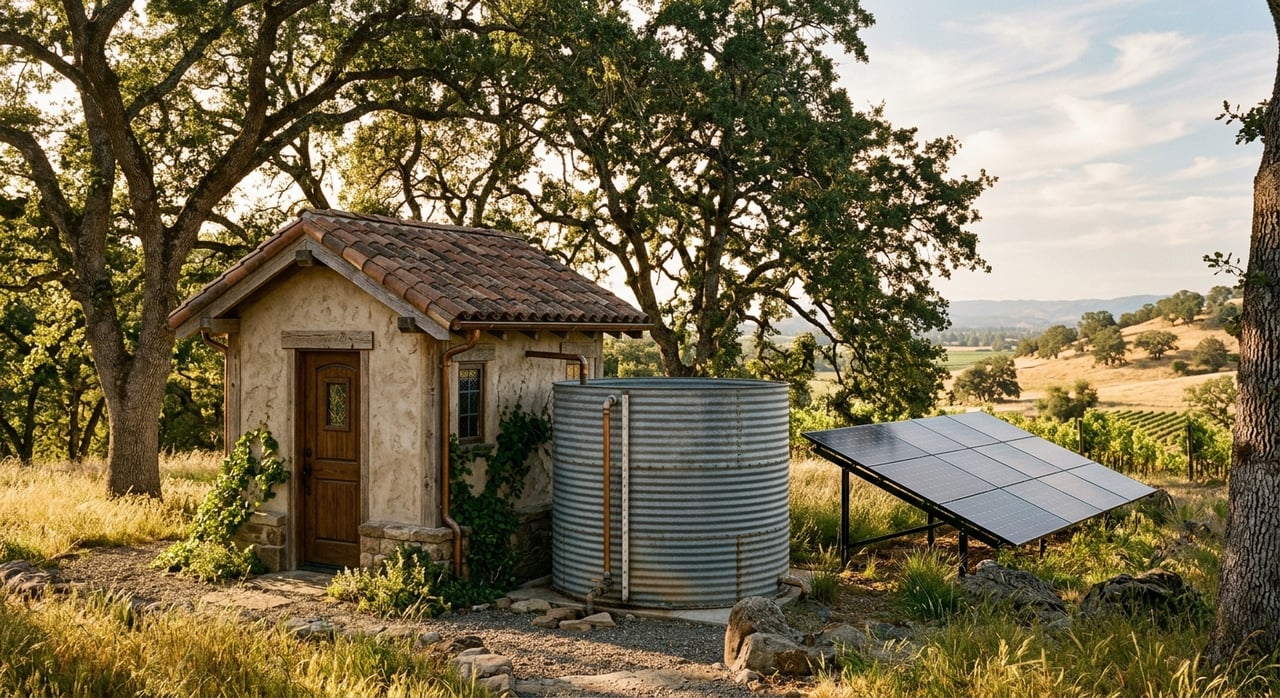
What to Know About Hopland Hobby Farm Properties
May 28, 2026
May 28, 2026
Looking for land near Hopland can feel exciting and a little overwhelming at the same time. You may be picturing a few acres for animals, an orchard, a small vineyard, or simply more space and privacy, but rural property comes with questions that do not always show up in a typical home search. This guide will help you understand what makes Hopland unique, what to verify before you buy, and how to think clearly about acreage in this part of Mendocino County. Let’s dive in.
Hopland is an unincorporated community in Mendocino County’s Sanel Valley along US 101. County planning describes it as a place with residential, commercial, and light industrial uses, with Old Hopland along State Route 175 east of the Russian River. The county also notes that Hopland is evolving from a primarily agricultural area toward wine and tourism while working to preserve its historic and agrarian character.
For you as a buyer, that creates a specific kind of market. Hopland is not a suburban expansion story. County policy focuses development within and around Hopland and Old Hopland, while retaining the pattern of outlying rural and remote residential lands.
That matters because the area tends to offer a compact town core paired with surrounding rural parcels. If you want land without giving up access to a small local service hub, Hopland can be an appealing fit. It often feels more land-oriented than polished, which is part of the draw for many hobby-farm buyers.
Hopland’s physical setting shapes the buying experience. Mendocino County points to constraints tied to the narrow valley, the Russian River system and floodplain, US 101, and the North Coast Railway. In practical terms, a parcel may look spacious on paper while having only part of the land that is easy to access, build on, or actively use.
That is one reason acreage shopping here requires a different mindset than shopping for a standard house in town. You are not just buying square footage and finishes. You are evaluating terrain, utility systems, access, and the realistic day-to-day function of the land.
One of the biggest mistakes acreage buyers make is assuming the listing description tells the whole story. In Hopland, the zoning framework is a critical first step. Because Hopland is inland, Mendocino County Division I zoning rules apply, and the county adopted an amended inland zoning code on September 10, 2024.
Applicable zoning districts can include:
The key point is that the base zone is only the beginning. Mendocino County also allows combining districts and overlays, including minimum lot size, flood plain, seismic study, and planned development overlays. Those overlays can materially affect what you can build, expand, or change later.
Two parcels with similar acreage can have very different development potential. If your goal is to add a barn, create an ADU, establish agricultural uses, or keep future options open, parcel-level review is essential. A general impression of “country property” is not enough.
Mendocino County’s Planning Division handles rezones, agricultural preserve applications, subdivisions, use permits, variances, certificates of compliance, and boundary line adjustments. If you are buying with future plans in mind, it makes sense to verify those paths before you write an offer, not after closing.
A practical starting point is confirming the APN, acreage, inspection zone, and general zoning through the county’s public lookup tools and Hopland planning maps. That first pass can quickly tell you whether a property deserves deeper review.
If you are shopping for agricultural land, Williamson Act status should be on your due-diligence checklist. Mendocino County explains that agricultural preserve contracts restrict land to agricultural or related open-space uses in exchange for lower property tax assessments based on farming or open-space value rather than full market value.
That can be meaningful financially, but it also comes with land-use limits. If you are drawn to a parcel because it seems flexible, make sure that flexibility is real. Tax treatment and permitted uses do not always point in the same direction.
For hobby farms and rural acreage, water and wastewater are often the most important systems to evaluate. County Environmental Health handles on-site sewage systems and water wells. The county states that property owners must keep septic permits current, that new applications are submitted digitally, and that Hopland is among the special permit areas for septic and well review.
The county also provides forms for site evaluation, percolation, water quantity, and water-well applications. That should tell you something important right away: utility questions here are not side issues. They are central to the value and usability of the property.
Mendocino County’s general plan also notes potential limitations on public water and wastewater services in the Hopland valley. Some parcels near town may have district service through Hopland PUD, while more rural properties may rely on private wells, septic systems, or different utility arrangements.
Before you fall in love with a parcel, try to get clarity on:
If you want animals, irrigation, a guest unit, or additional outbuildings, those answers become even more important.
On rural acreage, wildfire readiness is not optional. Mendocino County updated its Fire Hazard Severity Zone map for local responsibility areas in 2025. CAL FIRE states that 100 feet of defensible space is required by law, and the county also warns that Public Safety Power Shutoff outages can last multiple days.
That has real implications for your day-to-day ownership costs and planning. You may need to think about vegetation management, backup power, emergency access, and insurability well before closing.
The county maintains public map layers for:
For acreage buyers, those map layers can be just as important as photos, views, or fencing. A beautiful property still needs workable access and manageable risk.
A common assumption is that more acreage means more options. In practice, the usable portion of a rural parcel may be affected by floodplain areas, slope, access routes, utility constraints, and zoning overlays. Hopland’s narrow valley conditions and the presence of the Russian River system can make this especially relevant.
That means your buying decision should focus on functional land, not just gross acreage. Ask yourself how much of the property supports the life you actually want. A smaller parcel with better access, clearer utilities, and fewer constraints may serve you better than a larger but more limited tract.
Possibly, but this is one of those questions that requires a parcel-specific answer. According to Mendocino County, ADU guidance and inland zoning standards control allowed uses and development standards, while factors like parcel size, setbacks, septic capacity, and permit review all affect what may be approved.
If your plan depends on future improvements, make that part of your due diligence from the start. Rural buyers often do best when they treat improvements as a question to verify, not an assumption.
Maybe, but you should never buy based on future subdivision without checking the rules first. Mendocino County land-division regulations and zoning minimum parcel sizes will shape what is possible.
This matters for both lifestyle buyers and investors. If resale flexibility or long-term land planning is part of your strategy, verify subdivision potential before you commit to the property.
If you have also looked in Sonoma County, the contrast can be helpful. Sonoma County Tourism describes Sonoma County as having nearly 63,000 acres of vineyards, more than 425 wineries, and 19 AVAs. It also identifies Alexander Valley as Sonoma County’s largest wine region, with about 15,000 vineyard acres and 31 wineries.
Hopland offers a different feel and planning context. Mendocino County’s policies emphasize keeping development focused in and around the town center and Old Hopland, preserving historic character, and discouraging new commercial development along the newer US 101 corridor outside the community.
For you, that often means Hopland feels less visitor-intensive and more rooted in land use, systems, and rural practicality. If you want a property for animals, orchards, a hobby vineyard, or more self-directed country living, that can be a real advantage. The tradeoff is that every parcel needs careful verification.
Before you move forward on any hobby farm or acreage near Hopland, start with a disciplined review of the basics:
This kind of process may feel detailed, but it can help you avoid expensive surprises. With rural property, good due diligence is part of good buying.
Acreage purchases are often more technical than they first appear. You may be evaluating zoning overlays, septic records, water questions, access issues, and future land-use options all at once. That is why working with someone who understands rural systems and North Bay land patterns can make the process much smoother.
Erik Terreri brings a practical, analytical approach to country property, with experience across wine-country and rural real estate, including properties that involve wells, septic, and more complex land questions. If you are considering a hobby farm or acreage near Hopland, Erik Terreri can help you evaluate the property with clarity and confidence.
Whether buying or selling, trusted guidance ensures a seamless journey. Every detail is handled with care, turning real estate goals into achievements while providing clarity, confidence, and peace of mind throughout the process.