Which Healdsburg Neighborhood Lifestyle Fits You Best?
June 4, 2026
June 4, 2026
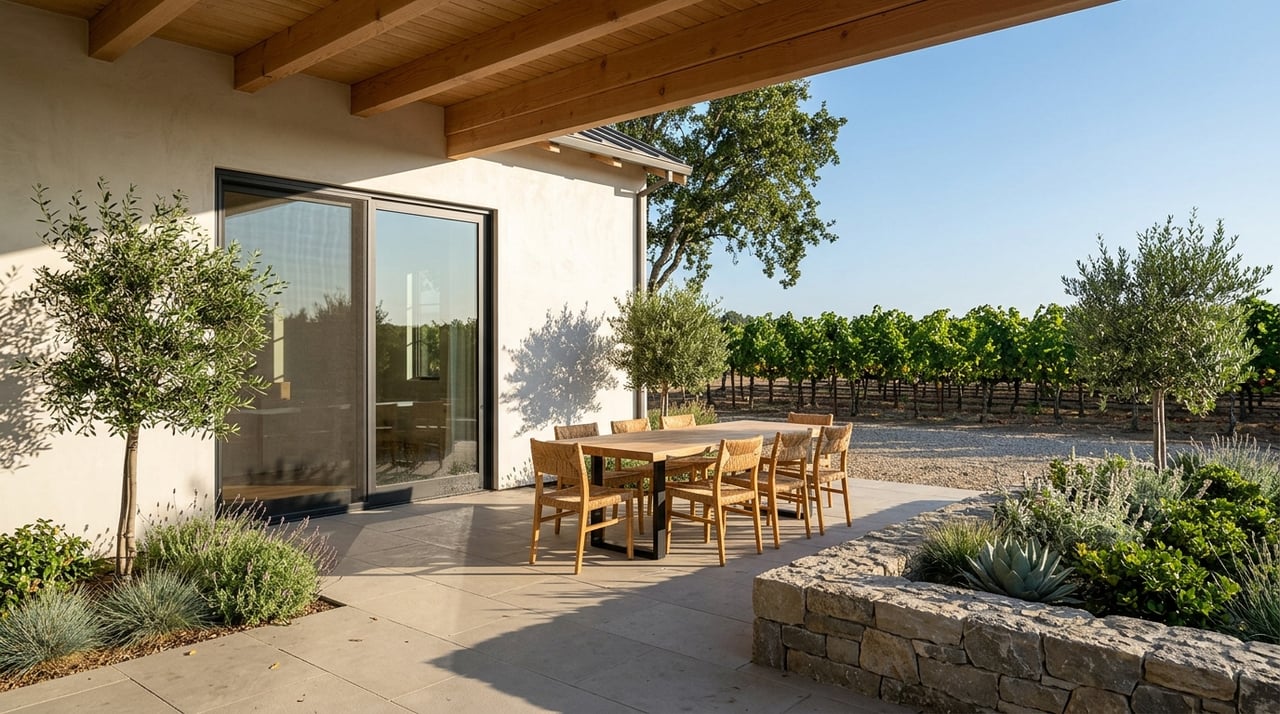
If you picture Healdsburg as one beautiful wine-country backdrop, you are only seeing part of the story. Daily life here can feel very different depending on whether you want to walk to the Plaza, live near evolving mixed-use corridors, or wake up closer to vineyards, hillsides, and trail access. If you are trying to match your home search to the rhythm you actually want, this guide will help you sort through those choices with more clarity. Let’s dive in.
Healdsburg is compact, covering about 4.42 square miles with an estimated 11,231 residents in 2024. That smaller footprint matters because many day-to-day decisions are less about long commuting distances and more about how you want your routine to flow.
City planning documents consistently emphasize Healdsburg’s small-town character, compact growth pattern, preserved agricultural edges, scenic hillsides, and a strong downtown Plaza as the city’s primary commerce center. In practical terms, that means neighborhood living often falls into three broad patterns: plaza-centered, corridor-centered, or rural-edge oriented.
The city also reports a mean commute time of 18.7 minutes, a 60.1% owner-occupied housing rate, a median owner-occupied home value of $950,100, and a median gross rent of $2,158. Those numbers do not tell you where you should live, but they do frame the market and the scale of everyday living in Healdsburg.
For many buyers, downtown is the clearest expression of everyday wine-country convenience. The General Plan identifies downtown and the Plaza as the city’s primary activity node, with retail, restaurants, hotels, personal services, pedestrian-oriented ground floors, and residential uses that support an active core.
If you want a shorter walk radius for coffee, meals, errands, events, and casual social time, this part of Healdsburg usually stands out first. It is the area where the city’s compact size feels most visible in daily life.
A downtown routine can be simple and efficient. You may find yourself walking to the Plaza, using city-owned parking lots when needed, and building your week around recurring public events and nearby services rather than longer drives.
The Plaza hosts special events and music festivals, while West Plaza Park hosts the Saturday farmers market from May through November. The city also highlights more than 20 private galleries and recurring arts events, including Tuesdays in the Plaza and the Jazz Festival.
Downtown also includes practical details that make daily use easier. There is free Wi-Fi in the area between City Hall and the Police Department, including the Plaza, Villa, and Community Center, plus free city-owned downtown parking lots and time-limited street parking.
Parts of the older residential core are shaped by historic district rules. The Johnson Street and Matheson Street Historic Districts are subject to special review, and the city identifies architectural styles ranging from Homestead and Victorian to Italian Renaissance and other Revival styles.
That does not mean every in-town property feels the same. It does mean you may notice a stronger relationship between neighborhood character, preservation, and design review in some older sections of town.
Downtown may be a strong fit if you want:
If downtown feels a little too concentrated, the transition pockets can offer a middle ground. These are the areas where neighborhood living and mobility improvements meet a more mixed-use pattern.
One of the clearest examples is Grove Street. The Grove Street Neighborhood Plan covers the stretch between Dry Creek Road and West Grant Street, and the current Complete Streets project is intended to add curb, gutter, sidewalk, planting strips, bike facilities, raised crosswalks, upgraded bus stops, street trees, and underground utilities.
This kind of planning points to a neighborhood-oriented area that is becoming more comfortable for walking and biking over time. If you like the idea of being connected to town without being right in the center of the Plaza environment, these pockets can feel like a practical compromise.
North of downtown, the city’s design guidelines describe Character Area 6 as having small office buildings, larger retail stores, hotels, and some low-scale multifamily development, with a more village-like character than the downtown core. The city’s goal there is to help extend the downtown feel northward.
Character Area 7 stretches along Healdsburg Avenue and west along Dry Creek Road to Highway 101. This area includes offices, hotels, restaurants, industrial and service uses, and some low-scale multifamily at the south end, while also marking a transition from vineyards on the west toward a more urban edge.
These corridor areas can support a flexible routine, but they do not always deliver the same pedestrian comfort as the downtown core. The city’s guidelines specifically note that parts of this corridor are less pedestrian-friendly because of wide roads and parking patterns.
That matters if your ideal day includes frequent walking between stops. You may still be close to useful services and access routes, but the experience can feel more auto-oriented than Plaza living.
These areas may work well if you want:
For some buyers, the dream of Healdsburg is less about stepping out to the Plaza and more about space, views, and a quieter daily rhythm. That is where vineyard-edge and hillside pockets become compelling.
The city frames the Saggio Hills area as a transition between Alexander Valley agriculture and Healdsburg’s small-town character. It is described as having a rural character, with no curbs or defined pavement edges, plus vineyards, open space, and rolling hills around it.
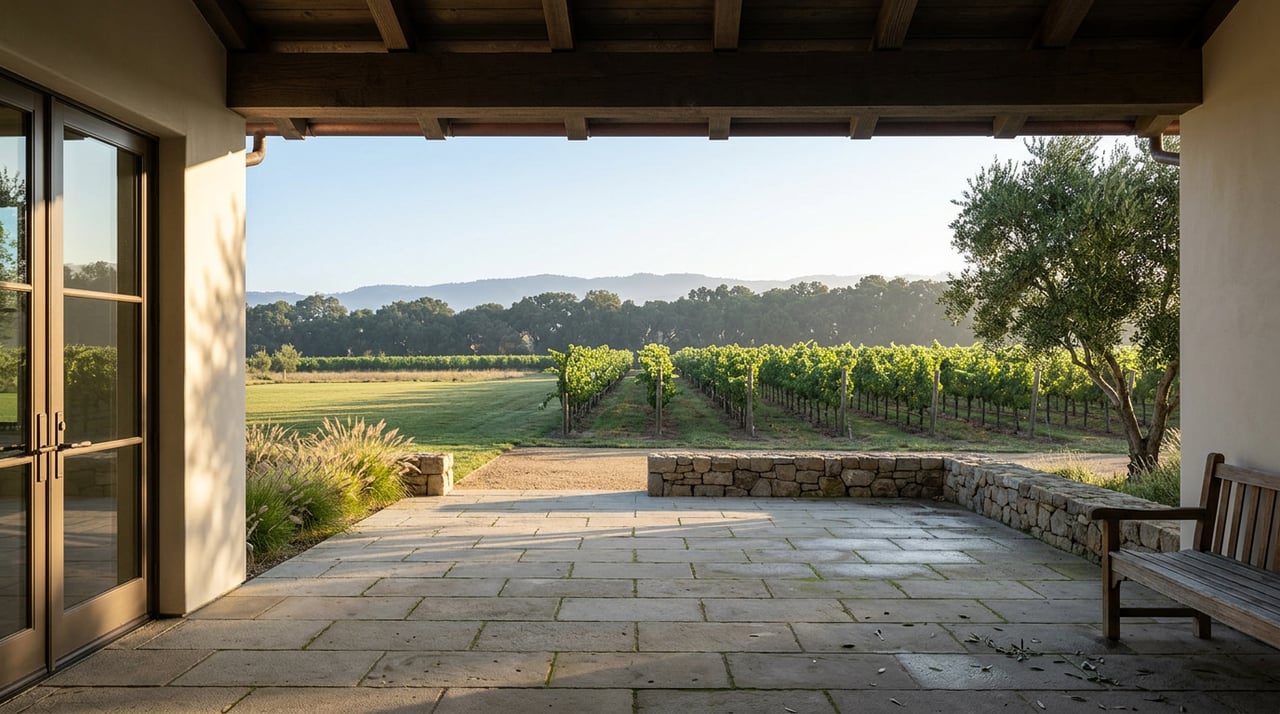
In these settings, your routine often becomes more home-centered and car-dependent. The payoff can be a stronger sense of privacy, broader views, and a closer relationship to the agricultural landscape that defines the region.
The General Plan also emphasizes preserving surrounding community separators in agricultural use and open space, along with protecting Fitch Mountain and nearby hillsides and ridgelines. That preservation focus helps explain why some edge areas feel visually distinct from more built-up parts of town.
If trail access matters to you, Healdsburg offers several notable open space resources. The city highlights Healdsburg Ridge Open Space Preserve and Fitch Mountain Park and Open Space Preserve, and its pedestrian system includes the 1.3-mile Foss Creek Trail.
For buyers who prioritize outdoor routines, these amenities can shape everyday living just as much as a nearby restaurant or shop. Morning walks, trail outings, and a stronger connection to hillsides and open space can become part of the value of the location.
If you are comparing in-town homes with rural-edge properties, the lifestyle gap can be bigger than the mileage suggests. In wine-country markets, that difference often shows up in how you plan errands, how often you drive, and how much importance you place on privacy, land, and scenery versus immediate walkability.
For buyers considering larger parcels, vineyard properties, ranch-style homes, or homes with more specialized systems, local knowledge matters. That is especially true when your search moves beyond simple location preferences into property-specific considerations tied to land, infrastructure, and long-term use.
No matter which pocket you choose, everyday support systems still shape how easy life feels. In Healdsburg, several city and regional resources help make the town function well for full-time living.
The Healdsburg Regional Library is located on Piper Street and includes the Sonoma County Wine Library. Providence’s Healdsburg Hospital on University Avenue is described as the primary inpatient, outpatient, and emergency care provider for Healdsburg, Windsor, Geyserville, and Cloverdale.
Transportation options are relatively robust for a city this size. Route 67 is a free Monday through Saturday shuttle, Route 60 runs seven days a week to Santa Rosa, Windsor, and Cloverdale, and the DASH program offers pre-scheduled rides for seniors for medical, shopping, and social trips.
The city also notes public EV charging stations at City Hall, Branch Lane, the Senior Center, and the Maher Parking Lot. For some households, those details can make in-town and near-town living easier to manage without relying on the same routine every day.
Healdsburg Unified School District serves preschool through 12th grade. The district says its elementary program is split between Healdsburg Elementary for grades TK through 2 and Fitch Mountain Campus for grades 3 through 5, and its attendance area also includes Alexander Valley School and West Side Union School District for elementary grades.
When you are evaluating neighborhoods, it helps to confirm current attendance and enrollment details directly with the appropriate district. Boundaries and assignment details can change over time.
The best neighborhood fit usually comes down to the routine you want, not just the home you like. In Healdsburg, that often means being honest about whether you want your day anchored by the Plaza, by a flexible in-between location, or by a more private edge-of-town setting.
A simple way to think about it is this:
Each option can deliver a version of wine-country living. The difference is how that lifestyle shows up between morning coffee and the last errand of the day.
If you want help comparing Healdsburg neighborhoods through the lens of your routine, property goals, and the realities of this local market, reach out to Erik Terreri. He can help you evaluate what fits best, whether you are looking for an in-town home, a vineyard-edge property, or something more rural and specialized.


Whether buying or selling, trusted guidance ensures a seamless journey. Every detail is handled with care, turning real estate goals into achievements while providing clarity, confidence, and peace of mind throughout the process.