What to Verify for Off Grid Homes in Asti & North Sonoma
May 21, 2026
May 21, 2026
Wondering whether a rural property in Asti or North Sonoma is truly “off-grid ready”? On acreage in the 95425 area, a well, septic system, or solar setup can look simple at first glance, but the real story is in the permits, records, tests, and licensed work behind it. If you are buying or selling a country property, this guide will help you understand what to verify, what questions to ask, and where delays can happen so you can move forward with more confidence. Let’s dive in.
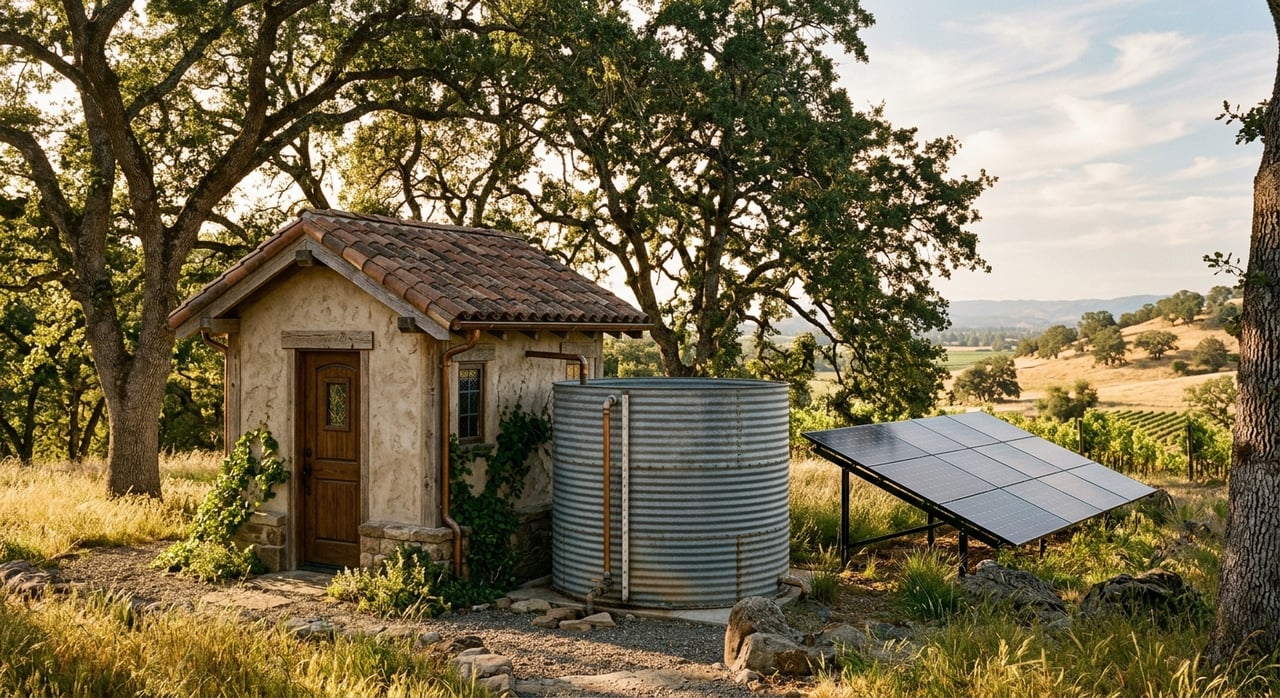
In Asti and North Sonoma, many properties rely on private systems rather than public utilities. That often means water from a private well, wastewater handled by a septic system, and power supported by solar, batteries, or backup equipment.
These systems are not necessarily a problem. In fact, they are a normal part of rural living in this corridor. The key is understanding that due diligence is more record-driven here than it is for a typical in-town home.
For rural-system permitting in Sonoma County, Permit Sonoma is the main local agency to know. Its permit portal covers well construction, septic applications, and some solar permitting paths, so it is often the first place to check when you want to confirm whether records exist.
That matters because current local permitting conditions can affect timelines. Permit Sonoma says a well construction permit is required to drill a new or replacement water supply well, destroy an existing well, or bore 15 feet or more below grade.
The county portal also says non-emergency well permits are currently suspended under a Sonoma County Superior Court order served on December 17, 2024. In practical terms, if a property needs a new or replacement well, that issue may be more complicated than many buyers expect.
There is also a Public Trust Review process for certain water wells in the Public Trust Review Area. For applications submitted after October 4, 2022, discretionary review may be required before a permit is issued, and that can add months to the process.
When you look at a rural property, it is easy to ask only whether the well works. That is important, but it is not enough. You also want to know how the well was built, whether records are available, and whether the water has been tested recently.
The California State Water Board says private domestic well water is not regulated by the state, which means the owner is responsible for water safety. For you as a buyer, that makes testing and documentation especially important.
Ask for these items early in the process:
The driller’s log matters because it records construction details and is submitted to the local permitting agency, the California Department of Water Resources, and the owner. If a seller does not already have it on hand, it is still a key record to track down.
Not every well on a rural parcel is intended for household drinking water. The California Department of Water Resources describes domestic supply wells as serving one household, while irrigation wells are field-use wells that are not intended for drinking water.
That distinction can be especially important on vineyard or mixed-use acreage. If you are assuming one well covers everything, make sure the records support that assumption.
The State Water Board’s 2025 guidance recommends testing private domestic well water at least annually for:
Additional testing may be appropriate if the taste, color, or smell changes, or if other conditions suggest a problem. If a seller has recent results, review them. If not, that is usually a sign to line up testing during due diligence.
If a well needs work, this is not a general handyman project. State guidance says domestic wells should be drilled by a C-57 well drilling contractor, and owners should contact a state-licensed well driller rather than attempt a DIY repair.
For buyers, that means one practical question: if repairs or upgrades were done, who did the work, and was that scope consistent with the contractor’s license?
If public sewer is not available, Sonoma County says homeowners must have septic systems. In California regulations, these are called onsite wastewater treatment systems, or OWTS.
For a buyer, the goal is not to become a septic expert overnight. It is to confirm what type of system is in place, whether the paperwork exists, and whether the maintenance history makes sense.
Focus on these core questions:
Sonoma County’s permit portal lists separate septic construction, design, and site-evaluation applications. The county also notes that non-standard OWTS require a permit for operation, which makes system type a very important detail to confirm.
EPA guidance says the average household septic tank should be inspected every 1 to 3 years and pumped every 3 to 5 years. Systems with pumps or mechanical parts generally need more frequent inspection, often about once a year.
For a buyer, those dates help you judge whether a system has likely been maintained in a routine way. If there are no records, plan to ask more questions rather than assume everything is current.
Where a design or site evaluation is needed, California’s OWTS policy says that work should be done by a qualified professional licensed or certified in the state. Examples include a registered environmental health specialist, professional engineer, professional geologist, or a certified soil scientist recognized under the policy for site evaluations.
Installation and major septic work should be handled by a licensed C-42 sanitation system contractor. As with wells, matching the work performed to the contractor’s license is a smart and practical check.
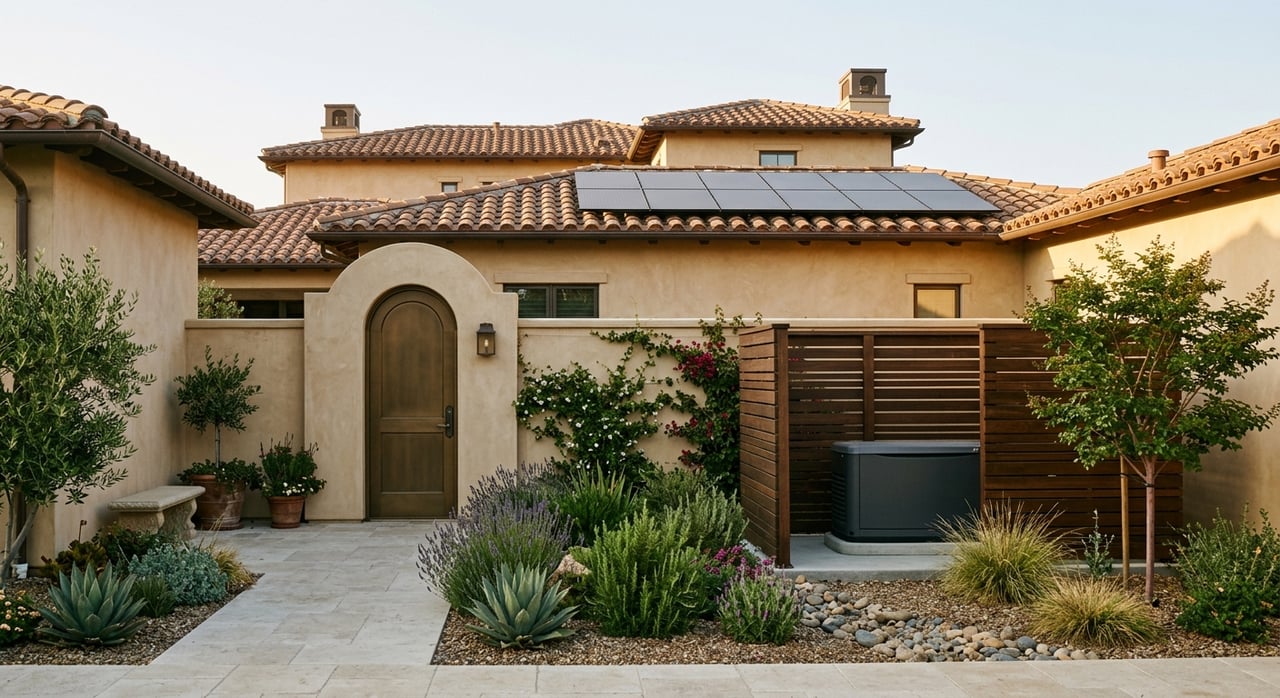
Many off-grid or semi-off-grid properties in North Sonoma depend on solar photovoltaic systems and battery-backed electrical setups. These can be a real asset, especially on parcels where energy independence is part of the appeal.
Still, buyers should approach these systems the same way they approach wells and septic. The question is not just whether the panels are there. It is whether the installation was properly permitted and completed by the right licensed professional.
Ask for:
Permit Sonoma offers an expedited SolarAPP+ path for roof-mounted residential photovoltaic systems and says a qualified licensed contractor is required. That gives you a local benchmark for what permitted work should look like.
California contractor classifications help you check whether the installer’s license matched the work performed. C-10 electricians work on electrical wiring and solar photovoltaic components, while C-46 solar contractors install, modify, maintain, and repair thermal and photovoltaic solar systems.
A practical step before closing is to verify license status and complaint history through the Contractors State License Board. If the paperwork is thin, that check can help you understand whether the installation file is solid or needs more investigation.
On a rural property in Asti or North Sonoma, your best protection is organized documentation. Here are the most useful items to collect and review:
When these records line up, you can evaluate the property with much more clarity. When they do not, the next step is usually to slow down and bring in the right local or licensed expert.
Missing paperwork does not always mean a property has a major problem. In rural transactions, it can simply mean files are old, scattered, or never collected in one place.
Even so, incomplete records raise real questions. If there is no driller’s log, no recent water test, no septic history, or no permit trail for solar work, you may need extra time and specialist input before you can understand the true condition and compliance picture.
That is one reason rural transactions benefit from a methodical approach. In this part of Sonoma County, reducing risk usually comes down to verifying that the permits, reports, tests, and license scopes all line up.
If you are buying in 95425, the most helpful mindset is to stay curious and document-focused. Ask direct questions, request records early, and treat each rural system as its own due diligence track.
If you are selling, the same principle works in your favor. When you can provide organized well, septic, and energy records up front, buyers tend to understand the property faster and with fewer surprises.
That practical, systems-based view is especially important in wine-country and rural acreage transactions. These properties can be exceptional, but they reward buyers and sellers who take the technical details seriously.
If you want help evaluating a rural property in Asti, Cloverdale, or North Sonoma, Erik Terreri brings a practical, detail-oriented approach to country real estate and off-grid systems.

Whether buying or selling, trusted guidance ensures a seamless journey. Every detail is handled with care, turning real estate goals into achievements while providing clarity, confidence, and peace of mind throughout the process.